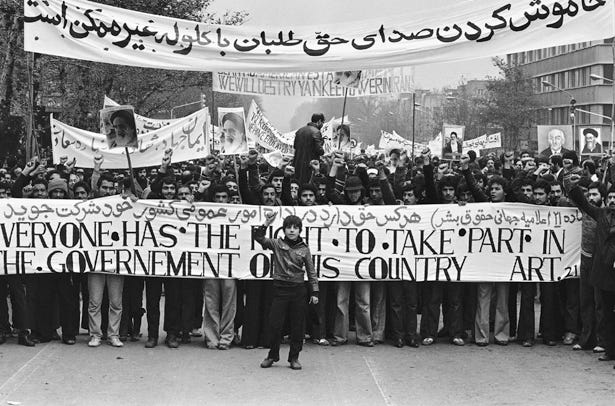
On Revolutions
An Interview with Professor John Keane

The following interview about the past, present and future of revolutions was conducted by Farnaz Hadavandkhani and published in Critique of Thought, volume 31, 4-5 (Summer 2025). French, Arabic and Farsi translations are also available.
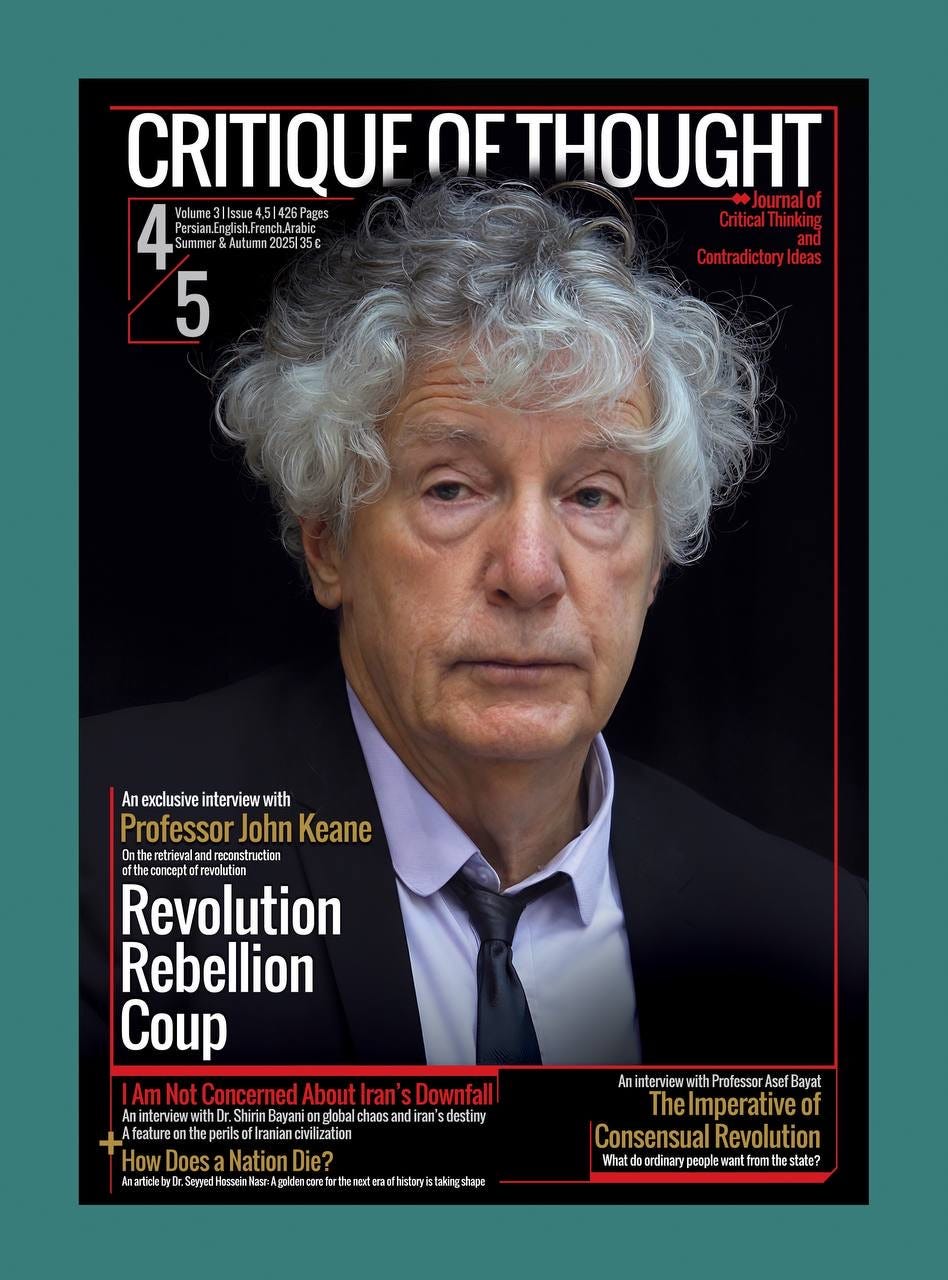
A world-renowned political thinker and public intellectual, founder of the world’s first Centre for the Study of Democracy at the University of Westminster in early 1989, John Keane is distinguished Professor of Politics at the University of Sydney, and author of widely influential works on civil society, violence, revolution, media, empires, China and democracy. Welcome to this exclusive interview with Critique of Thought journal.
Salaam and sobh bekheir. Thank you for the invitation.
In your essay "Rethinking the Concept of Revolution ", which has not yet been published, but was made available to Critique of Thought journal, you begin by warning of the semantic poisoning of the word revolution and its overusage in phrases such as “fashion revolution”, the "sexual revolution" and the "green revolution". Hence our first question: shouldn't we accept that the word "revolution" is exhausted and in need of replacement by a successor category?
The word revolution is indeed suffering popular overuse and semantic pollution, especially when used by eager advertisers, politicians, and public relations firms. There are not only serious scholarly analyses of scientific revolutions (Thomas Kuhn) and the unfinished digital communications revolution, but loose public talk of toilet revolutions (as in Modi’s India) and everyday revolutions of taste, cooking, fashion, dress codes, and sexual preferences. Against this process of semantic overstretch and trivialisation, my work aims to retain a version of the concept of revolution because I think it is a meaningful political word par excellence. It has a continuing global significance in helping us understand complex matters such as power and conflict, anger and ressentiment, fear and violence, the importance of civil society, and the role of surprise and unintended consequences in human affairs. For this reason, I don’t accept the verdict of the German historian Reinhart Koselleck, who in his Futures Past: On the Semantics of Historical Time concluded, with a sigh, that the word revolution has been reduced to an empty formula and “flogged to death” by the multiplication of conflicting usages by a vast variety of different political groups and forces. I see things differently. The concept isn’t dead. It lives on and I predict it will continue to haunt our political lives, which is why we need carefully to understand its history and its variable and conflicting meanings, and why, I would like to explain, the wise recovery of the category requires its conceptual reconstruction.
In your unpublished essay, you say that we continue to face fundamental problems in defining and explaining revolutions. You point out that revolutions are events that are inherently contradictory, with conflicting agendas and unpredictable outcomes. Many great revolutions turn out to be reactionary, or preserve the status quo, as did the so-named 1688 Glorious Revolution in England which put William of Orange on the throne. Given this, shouldn’t we accept that in their essence revolutions are typically conservative in that they always have the effect of preserving the status quo at the expense of forces pushing for change?
Your challenging question forces me to say something about the genealogy of the word revolution. Strangely and confusingly, in various languages and contexts, it once meant exactly what you say: revolution was a word to describe the restoration of a lost or lamented past. Polybius, the Greek historian, likened revolutions to a slowly turning wheel driven by Fortune. He thought that all forms of rule are entrapped within cycles of Fortune: kingship passes into tyranny, tyranny into aristocracy, aristocracy degenerates into oligarchy, oligarchy into democracy, while democracy breeds mob rule and a state of nature which inevitably produces kingship. In various European languages in the 14th century CE, revolution, from the Latin revolutionem, a revolving, a turning, a rolling back, became a celestial simile: a revolution is the eternal movement of a celestial body in a circular orbit. When contemporary observers of the anti- and pro-Medicean revolts in Florence during the late 15th and early 16th centuries spoke of rivoluzione, for instance, they did so in the political sense of a “returning to a starting point", that is, the restoration of a previous regime.
Shakespeare similarly uses this celestial simile when Hamlet reacts to a gravedigger’s rough treatment of a skull which might have once belonged to a courtier who practised the art of flattery to beg for favours: “Here's fine revolution, and we had the trick to see't" (Hamlet Act 5 Scene 1 [c 1599-1601]). His words are laced with heavy irony, to refer to the never-ending intrigues and cycles of power struggle spawned by monarchy. And when contemporary English observers described the expulsion of the Catholic Stuart dynasty in 1688 as a “Glorious Revolution”, a phrase first coined the following year, they used “revolution” in the same sense as Polybius, as a "turning back to a starting point ".
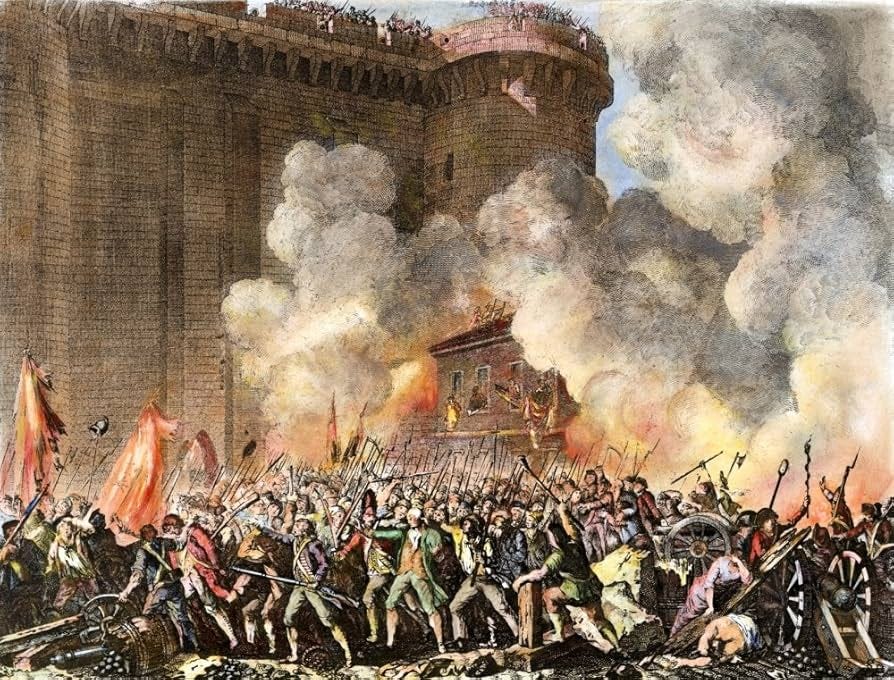
But here’s the thing. During the 18th century, in the Atlantic region, the word revolution underwent a semantic revolution. My wordplay refers to a fundamental paradigm shift, to the way the word revolution came to be redefined, to mean the overthrow of an established government and its forcible replacement by a new ruler or form of government. The semantic shift is evident in the early 1770s talk of a Revolutionary War in the American colonies, and in the later, oft-quoted remark of the Duc de Rochefoucauld-Liancourt to Louis XVI, on the evening of July 14th 1789, after the sacking of the Bastille: “Mon sire, ce n’est pas une révolte – c’est une revolution!” (“Sire, it is not a revolt - it is a revolution!”). The Marquis de Condorcet added: “Revolutionnaire ne s'applique qu'aux revolutions qui ont la liberte; pour objet”. Neologisms flourish. As Condorcet insisted, the word “revolutionary” now meant a dramatic political transformation whose goal is the expansion of citizens’ liberty. The new verb “revolutionise" (dating from 1797) refers to efforts to bring about a sudden, radical overthrow and striking transformation of an existing political regime. In these new 18th century circumstances, anachronisms also thrived. The new meaning of revolution was projected backwards onto earlier events, such as the dramatic arrest and public execution of Charles I in 1649, which contemporaries such as the Levellers never described as a revolution (they spoke of “reformation”, “justifiable rebellion” and the “Great Rebellion”). At first, there was plenty of semantic confusion. Old and new meanings were mixed together. But by the early years of the 19th century, the novel meaning of revolution was established. We entered the semantic universe in which today we speak of the French Revolution, the Bolshevik Revolution, and the1979 Iranian Revolution. Reforms are corrections of the abuse of power. By contrast, revolutions are seizures and transformations of state power, grand political happenings that upend and destroy prevailing expectations and old ways of handling power. Or, as the witty San Francisco journalist Ambrose Bierce famously said in more down-to-earth terms: revolutions are the bursting of government boilers that happen when the safety valves of public discussion and assembly are blocked.
Doesn’t the contested example of the events in England in 1648-1649 – was it the first “national revolution” or only a "reform" or "justified rebellion"? – suggest that we should pay attention to factors of translation and carefully understand political revolutions in different historical and social contexts?
Yes, we need to be mindful of the problems of mistranslation and arbitrary projection of the word revolution into different contexts. Some examples might help clarify the challenges raised by your question. Some scholars nowadays like to speak anachronistically of the Athenian Revolution (508–507 BCE), a popular revolt against a ruling oligarchy of aristocrats, but the ancient Greeks had no such word in their vocabulary. They preferred to speak of stasis (στάσις) in the sense of "discord” and “faction” generated by power struggles over social and economic problems and disagreements about constitutions. Herodotus and Thucydides spoke of “uprisings”; Thucydides referred to “changes of constitutions”. Modern usages of the word revolution in non-Western contexts equally produce translation problems, confusions, and misunderstandings. In Chinese, the noun gèmìng (名) combines old and new meanings: revolution is at the same time the overthrow of a government by the governed, a drastic and far-reaching alteration of ways of thinking and behaving, and a single complete turn of a wheel or a celestial body. But it has heavenly connotations, too. When influential writers like Liang Qichao first used the word during the last years of the Qing empire, they gave it a Confucian twist, to mean the revolt of the people to rid themselves of a ruler no longer enjoying the mandate of heaven (tiān mìng). But consistent with your point about the importance of translation and context, it’s remarkable how the overthrow of the Qing dynasty wasn’t at the time called a revolution. It was instead named xinhai (辛亥) because that was the year in the traditional Chinese calendar (1911) in which it happened. Another example: in Arabic, as the Palestinian scholar Azmi Bishara has pointed out, the word revolution is usually translated as khurooj: to ‘go out’, as in to turn against community orthodoxies by making one’s private grievances public by taking them to the streets, or to another public space, in order to seek justice, often by appeals to God. And one final point: there are contexts in which the word revolution should be used, but typically isn’t. The French scholar Etienne Balibar has noted the bad habit of using the word revolution in Eurocentric ways. Whereas, for instance, the 1789 revolution in France is bound up with domestic notions of citoyenneté, abroad, at the colonised margins of the former French empire, there were apparently no revolutions, only “rebellions”, “guerilla resistances”, and “uprisings” of colonial subjects.
So what is the point of noting these anachronisms, substantial variations, may we ask? Don’t they endanger the very usefulness of the term?
No. The term revolution is no exception to the rule that all concepts in the human sciences - power, justice, society, reason, freedom, democracy, etcetera - are controversial. Contestability is among their most endearing qualities. They spark a sense of wonder about their utility and the world to which they refer; and the confusion and disagreement and categorization struggles they spawn force us carefully to think about and define their meaning with a measure of precision so that they can be deployed to make good sense of complex realities. We are meaning making animals; the thoughtful deployment through language of categories rescues us from the disasters of meaningless. When making sense of our world, there’s no positive, practicable alternative.
As I use the word, revolution is an ideal type (Idealtypus) in the sense of Max Weber. It’s an abstract, analytic category used to interpret political convulsions and to help us make sense of their otherwise chaotic and unintelligible dynamics. The word revolution doesn’t perfectly correspond to an externally given “reality”. It has hypothetical and subjectively biased qualities, but nonetheless it’s indispensable for highlighting, comparing and making sense of those historical moments when brutal power struggles to control state institutions erupt.
Revolutions are moments of great drama. Using armed force, amidst great public confusion and excitement, a group, or a coalition of groups, struggle to outflank the existing rulers and to seize control of the power vested in the governing institutions of a territorially bounded state. Armed to the teeth, revolutionaries prioritise the seizure and control of institutions such as parliaments, military airports, law courts, post offices, radio and television stations, and government office buildings. Friend-enemy thinking flourishes, along with dirty rumours, disagreements, pushing and shoving. Mao reminded us that revolutions aren’t graceful. They are not dinner parties. They aren’t made with rose water. They have a passionately chaotic quality because they are energized by popular mobilisations and the participation of ‘the people’ in struggles to capture and transform state power.
Revolutions are irruptions of people power. They are infused with a proto-democratic spirit. Defined in this way, it’s worth pointing out that the 18th-century redefinition of revolution coincided with the redefinition of popular revolts. Prior to that time, lacking the vote and formal civil liberties, commoners had regularly resisted their masters. Urban and rural revolts, local riots, millenarian uprisings, and the public burning of effigies and shaming of notables were commonplace. But such resistance was geographically dispersed and its language, as the English historian E.P. Thompson pointed out, was that of the ‘moral economy’ of people so frustrated that they decided to teach their masters a lesson. By the middle of the 18th century, throughout the European peninsula and its adjoining islands, the struggles of commoners to stand up and be counted changed form and direction. The old politics of clinging to the past through grumbling, shaming, vengeance and intimidation faded. A new, forward looking politics of combination with others sprang up. Local protests were linked to other local protests. With the help of improved roads, the printing press, and the spread of literacy, protest came to be organised and coordinated across great distances. The protestors began to speak in the name of a newly imagined subject: ‘the people’. They had a new target: governments, which were seen to be culpable - sackable, even electable - by a people determined to press home their claims upon power. The age of modern revolutions had arrived. Revolution now meant the struggle to seize and transform the power of governing institutions backed by the power of the people.
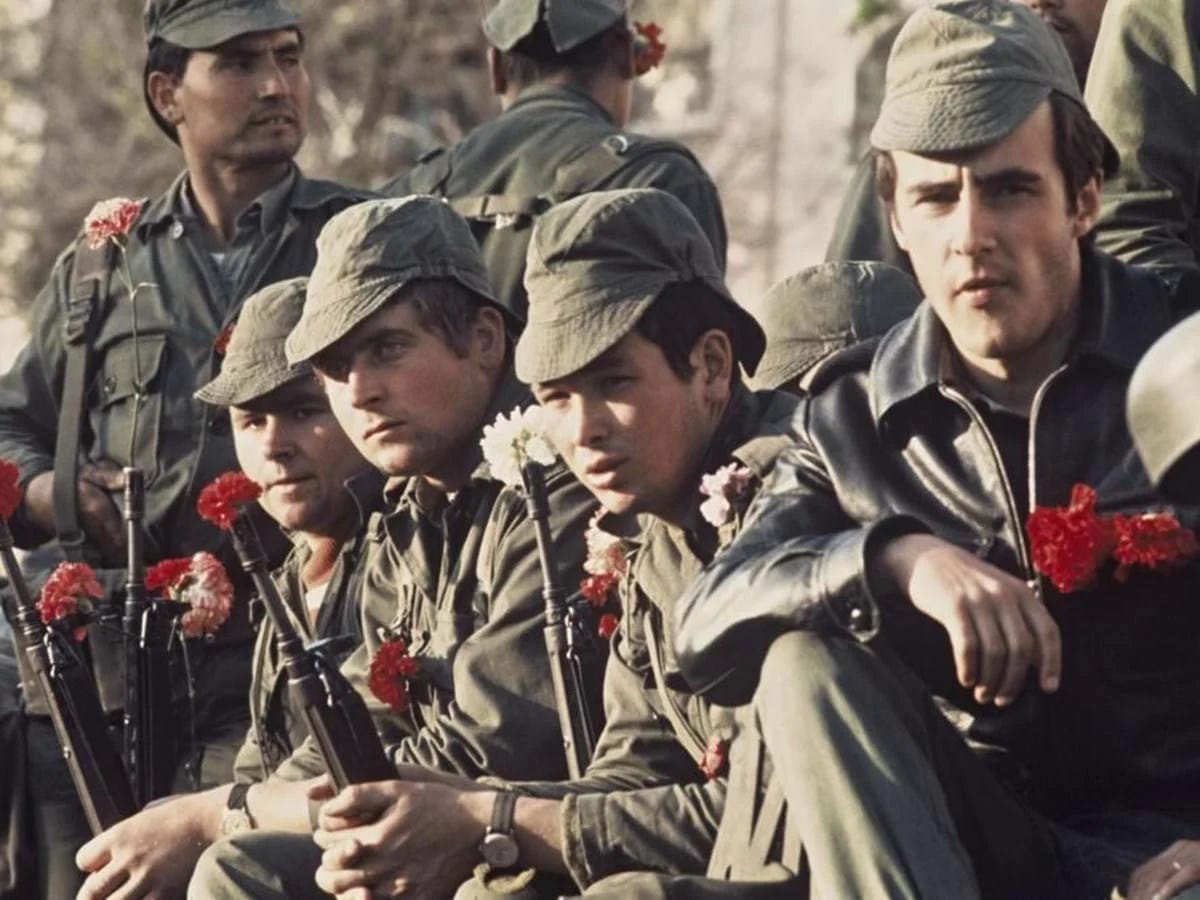
In your opinion, is the distinction between coups and revolutions now obsolete? Think of the developments in Portugal in 1974, when a coup plotted by army officers led thinkers like Samuel Huntington to say that the coup was the beginning of “third wave of democracy". Others called it a "carnation revolution", a "republic revolution" and a "democratic revolution". Was this an exceptional development, or were the events in Portugal an example of a new era marked by the breakdown of the distinction between a coup and a revolution?
Coup d’états are planned seizures of high-level state structures by military officers or armed groups. They are contrived in secret, and the plans made by the plotters are typically executed when everybody is asleep, or when most people are paying attention to other media cycles. By definition, coups don’t always have ‘the people’ behind them. The rule is that guns and tanks, not people, rule. The case of Portugal was exceptional. In April 1974, as you mentioned, mutinous Portuguese troops drove their tanks and other armoured vehicles into central Lisbon and occupied Terreiro do Paço, where nervous citizens offered them pink, red and white carnations. It marked the beginning of a political revolution in favour of what junior officers called “democratisation, decolonization and development”. More common are dynamics of the kind that first happened in Poland during the 1920s, when Marshal Józef Piłsudski stepped into a political vacuum produced by unstable government, hyperinflation and the assassination of the Polish president and staged a coup d’état. Rigged elections, arrests and trials of opposition leaders, and a new constitution that legalised dictatorship, followed. The 1973 coup d’état in Chile similarly destroyed democracy. It resulted in a brutal fascist campaign of torture, disappearances, murder and enforced exile. Coup d'états have also triggered nasty uncivil wars, as is happening today in Sudan, where the leaders of the Sudanese Armed Forces ousted a transitional civilian government and sparked a deadly conflict backed by outside forces that has has uprooted the lives of over 11 million people and plunged half the population into hunger.
I repeat: revolutions are different because they are people driven and aren’t planned. Their scripts are not written in advance. The struggles they unleash to conquer and alter the structures of government with the backing of popular mobilizations are proof of the power of the unexpected in human affairs. When they happen, and as their dynamics take hold, revolutions generate astonishing surprises. Who would have predicted, say, that a fire in a cinema in Ibadan in August 1978 would be widely interpreted as the fault of Pahlavi and spark huge protests in defiance of martial law, with loud calls for his immediate overthrow? Revolutions have an extraordinary magic: on a large scale, they irrupt suddenly and disturb and destroy everyday habits. Revolutions do more than stir up uncertainties and arouse public excitement, great confusion and widespread perplexity about the course of events. They also move the hearts and minds of millions of people, who quickly learn that the times are changing, that everything’s up for grabs, and that things will probably never again be the same.
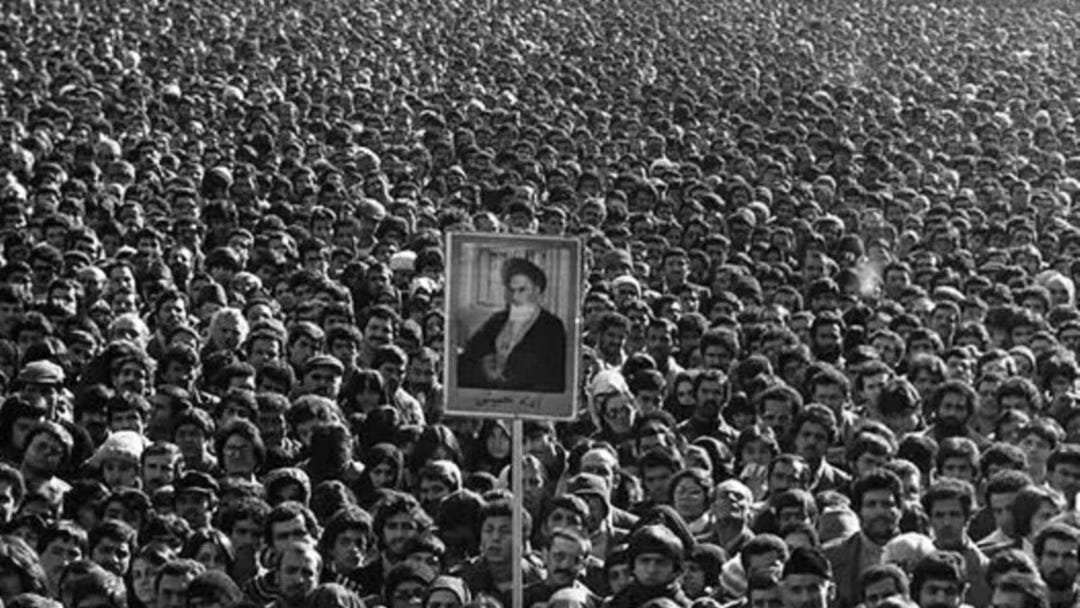
Are you saying that revolutions have their own hidden or peculiar logic?
Yes. For millions of people, revolutions are unplanned surprises on a large-scale. Karl Marx misled us. Supposing as a master teleologist who had his fingers on the pulse of human history, Marx believed that revolutions are bound to occur because the course of history shows that a ruling class cannot rule indefinitely, and thus must inevitably be overthrown. “Let the ruling classes tremble at a Communist revolution”, he and Engels wrote in The Communist Manifesto. “The proletarians have nothing to lose but their chains. They have a world to win. Workers of the world, unite!” Elsewhere, in his Eighteenth Brumaire, he forecast revolutions which would resemble the old mole that burrows through the soil of history before popping its head up to the surface (the simile is from Shakespeare’s Hamlet). He predicted that monarchies would be replaced by parliamentary democracy whose defects would in turn trigger demands by the working classes to overthrow capitalist ruling classes in favour of communist society. “Europe will leap from its seat and exultantly exclaim: Well grubbed, old mole!”, he wrote. The problem with this teleological way of thinking is its underestimation of contingency and uncertainty in human affairs. Revolutions are not only always the unexpected resultant of multiple forces. Their irruption unleashes great uncertainties and multiple unintended consequences which in turn often catch revolutionaries themselves by surprise. Azmi Bishara, whom I mentioned before, notes in his study of the 2011 Egyptian revolution how the revolutionaries gathered around the Muslim Brotherhood had no plans for the future, so that when violent anti-government demonstrations erupted in Tahrir Square and in other cities, confusion and paralysis spread through their ranks, so preparing the grounds for a military coup d’état.
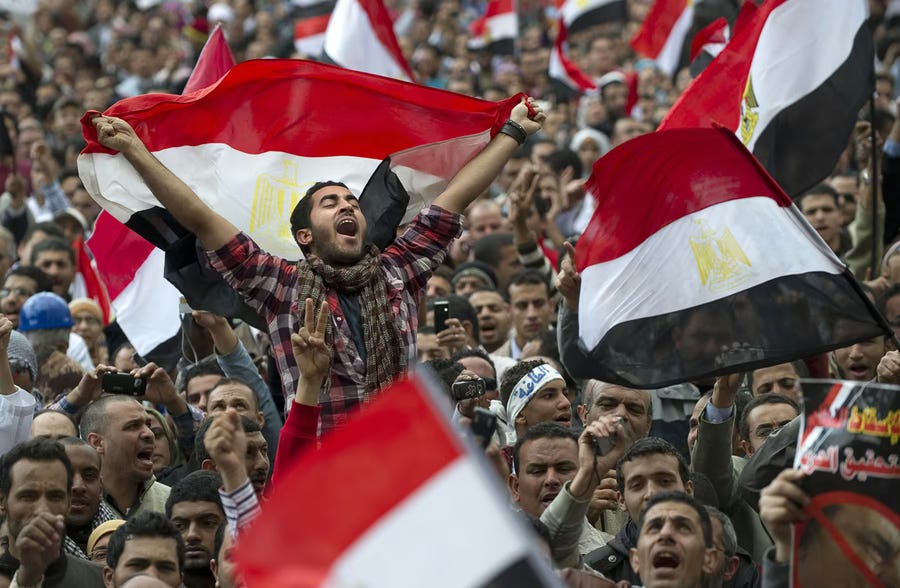
Revolutions not only catch everybody by surprise. Don’t they also feed upon public excitement and generate great joy?
They do. “Bliss was it in that dawn to be alive”, wrote William Wordsworth in his famous poem on the French Revolution, “But to be young was very heaven!” Underpinning the revolutionary excitement and joy is the loss of fear. There is a wonderful book about the 1979 Iranian revolution by the Polish writer Ryszard Kapuściński called Shah of Shahs. It points out that every true revolution has a profoundly psychological dimension. Revolutions happen when millions of people stop bootlicking and cast off the fear that has been eating away at their souls.
Of course, since revolutions are struggles to transform the sovereign power of government with popular mobilisation, they also create fear, both fear in the ranks of those groups who are outflanked and pushed aside in the revolution, and the fear generated by outbreaks of violence during the revolution. I think that Hannah Arendt’s On Revolution (1963) misrepresented revolutions. She argued that the pure form of revolution is a political upheaval in which subject peoples unite in self-governing councils to demand liberty, and to begin the search for a written constitution that guarantees their liberty, as happened in the United States. Arendt not only idealised the American Revolution - think for a moment of the revolutionaries’ eery silence about, and deep involvement in, the problem of slavery, which the revolution intensified - but also underestimated the evils lurking inside every revolution. Revolutions have a nasty habit of devouring their children. Pushing and shoving and other troubles begin well before the revolution. In the extreme, as they unfold, revolutions can breed a coup d’état, as in Egypt, or, as in the otherwise different cases of the American and Bolshevik revolutions, the establishment of an empire. Whatever the outcome, commonplace are the bouts of factional violence, revenge killings, arrests, kangaroo court trials, assassinations, disappearances and executions, as first happened on a large scale during the year-long reign of Terror organized by the Committee of Public Safety in 1793/4 during the French revolution. The arch-revolutionary Louis de Saint-Just remarked that those who make revolutions by halves dig their own grave. Descriptively speaking, he was right. Revolutions are laboratories of cutthroat friend-enemy politics. Even the dead, past generations and their customs, are drawn into the ‘great jousts’ of revolutions, as Michel Foucault noted when reporting from Tehran for Le Nouvel Observateur just weeks before Pahlavi was forced into exile.
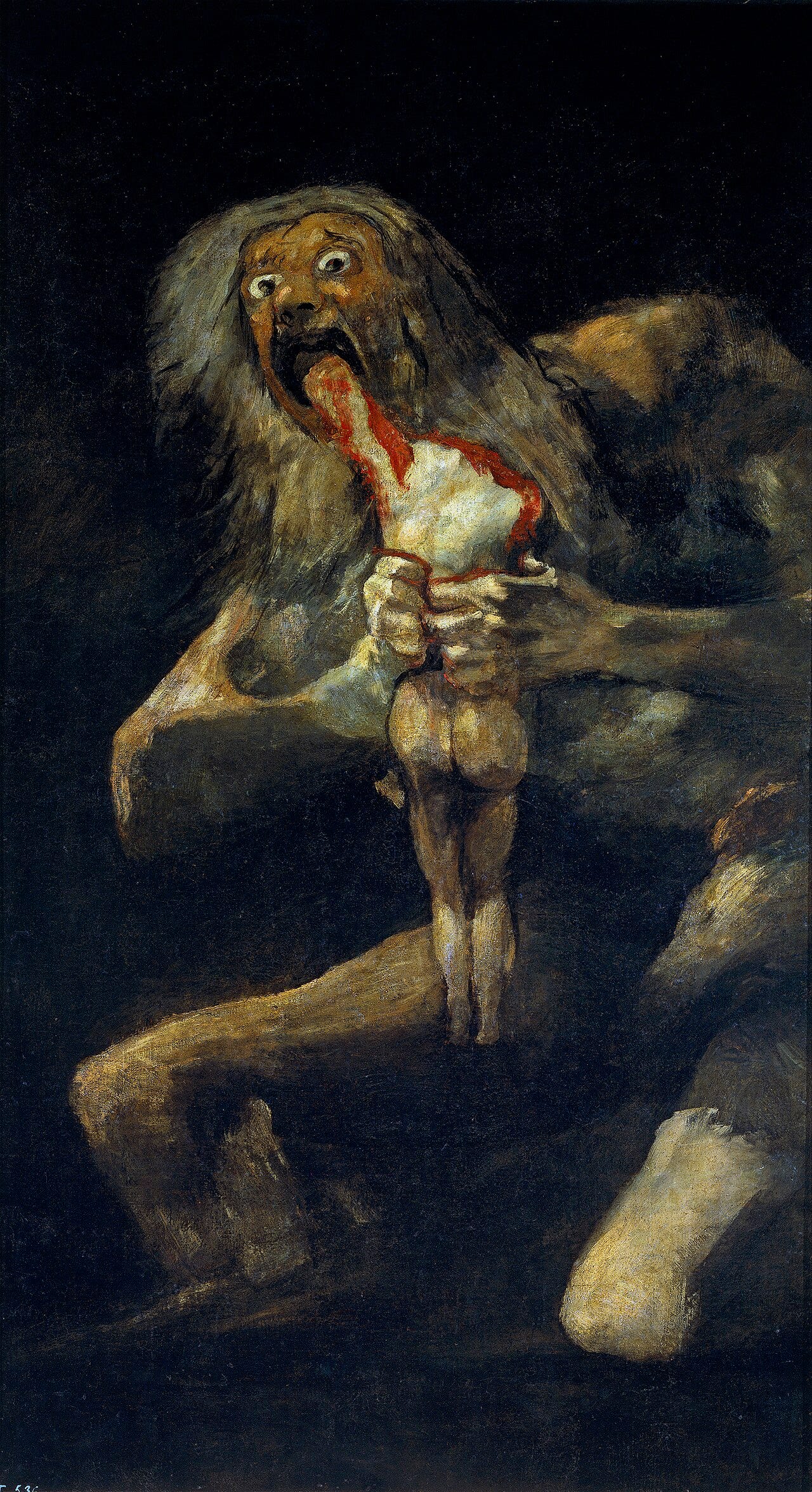
Francisco Goya’s Saturn Devouring His Son (Saturno devorando a su hijo), 1820-1823
When a revolution begins, the whole world feels as if it is turning upside down. Distrust of legalism spreads. Everything seems political. Hopes and dreams of a new order of things multiply. The revolution is thought by the revolutionaries to be a great cleansing, a forward-looking battle between the forces of darkness and light, barbarism and progress, on a stage of history, before great crowds of people. Unsurprisingly, wild and threatening rumours are the poisonous fruits of revolutions, as I experienced first hand in Iran in mid-2009, during the disputed elections, when I was named, along with the American philosopher Richard Rorty and Germany’s leading public intellectual Jürgen Habermas, as an MI6/CIA agent and counter-revolutionary. We were together accused by both the prominent newspaper Kayhan and Iran’s Deputy State Prosecutor of plotting to take over the state by “transforming the project of ‘civil society’ into ‘civil struggle’”. There was said to be evidence of a nasty conspiracy – a trahison des clercs organised and paid for by a global network of scheming foreign agencies, including the United States Congress, the Dutch parliament, the German Association for Foreign Policy, the National Endowment for Democracy and my own University of Westminster. Located at the heart of the grand conspiracy, it was said, were “three thinking engines of the CIA and MI-6”. Well, although to this day I have not dared to travel to Iran, I can honestly assure you that I’ve still not received a single payslip from either MI6 or the CIA.
Let me return to an earlier question: in the case of Iran, you are aware that whereas the coup d’état overthrow of Dr. Mossadegh's national government in August 1953 was seen by his supporters as the crushing of a revolution against the king and the royal family, the supporters of Mohammad Reza Pahlavi said that the overthrow of Mossadegh was not a coup d’état but a popular revolution in support of the Shah. Regardless of which view is closer to the truth, the line between a revolution and a coup d'état is very narrow. At such historical points, how should the differences and boundaries between a coup d’état and a revolution be recognized?
The 1953 overthrow of democratically elected Prime Minister Mossadegh was in my eyes a British- and US-led coup d'état plot executed by the Iranian army in support of British oil interests and Western geopolitical control over the region. To call the 28 Mordad coup d'état (کودتای ۲۸ مرداد) a popular revolution is a category mistake, a clear misuse of the word. But you are right. We need to be clear-headed about contested concepts. What I have tried to tell you so far is that revolution is a precious, old political category with a great variety of meanings shaped by linguistic, historical and cultural factors. I’ve offered a working ‘ideal-type’ definition, but there is no final and incontrovertible definition of a revolution. That is why – here’s perhaps a surprise - we need to be sensitive to new developments which test its meaning and force its possible redefinition.
I have in mind a few examples. Most obvious is the cross-border ripple effects of revolutions. Some mainstream political scientists are in the habit of supposing that revolutions typically happen inside and are confined to states, and that revolutionary action, by definition, primarily targets local state structures. Yet the historian Christopher Clark (Revolutionary Springs: Europe Aflame and the Fight for a New World, 1848-1849 [2023]) has shown how in the 1848-1849 revolutions in Europe, newspaper reports of an uprising in one place often lit revolutionary fires in other places. In the era of digital networked communications, with the help of livestreaming, the spirit of revolutions spreads even more quickly across borders. Space-time differences are reduced to zero. Azmi Bishara’s study of the Egyptian revolution, which began in numerous cities towards the end of January 2011, shows the decisive influence of prior events in Tunisia. I would add that the revolutionary infectiousness even spread from North Africa across the Mediterranean to Spain, where the Movimiento 15-M copied the use of public square encampments to protest against austerity policies, corruption of the political class, high youth unemployment and greedy banks.
Some thinkers in Iran are talking about a new phenomenon which they call “consensual revolutions”. Can revolutions produce agreements to disagree?
All revolutions have transformative effects on public mentalities. The French sociologist Pierre Bourdieu coined the term symbolic revolution. It’s an important phrase: all revolutions feed upon the widespread questioning of a previously taken-for-granted order of things and struggles to establish an agreed new normality. A paradigm shift occurs in such matters as body language, the clothes people wear, the food they eat, the words they use, and the concepts that shape their worldviews. If this is what you mean by a “consensual revolution’ then I agree. But remember: no revolution happens based on a universal agreement that everything must change. There are always profound disagreements, as in the explosive tensions in the early days of your revolution, about whether Iran should be a secular republic or governed by the theory of velayat-al-faqih. Such divisions are chronic in revolutions.
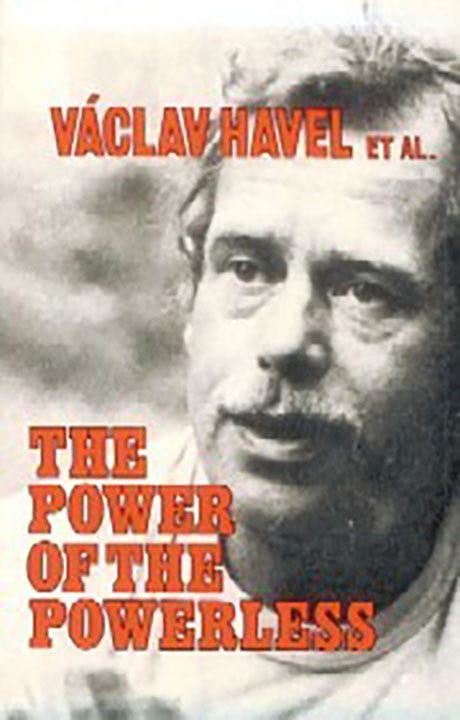
But there’s another sense in which we could speak of “consensual revolutions”. Think of the 1989 self-limiting revolutions in central-eastern Europe. After the imposition of martial law in Poland, I travelled to Gdańsk, to interview over a two-day period the historian and leading Solidarność intellectual Adam Michnik. When I asked him which book he would like to translate into Russian and send to the newly elected First Secretary of the CPSU, Mikhail Gorbachev, Michnik surprised me. His choice was Edmund Burke’s Reflections on the Revolution in France. For someone who was at the time considered a leftist democrat, the recommendation of a book written by a conservative right-winger was unorthodox, to say the least. Michnik’s reasoning was that Edmund Burke’s book about the horrors of the French Revolution taught us that modern revolutions end badly, and that therefore in matters of power those who want to overthrow a corrupt political regime must do everything they can to prevent evils by exercising self-restraint. And so it came to pass: within the ranks of the independent trade union Solidarność, there was a high level of awareness that previous revolutions destroyed their own ideals of liberty, equality and democracy because of outbreaks of violence, fear, and terror. For the Polish opposition, there was widespread agreement that the revolution would need to exercise self-restraint and to be self-limiting. To speak of a self-limiting revolution might sound oxymoronic, but the Polish model of the self-limiting revolution succeeded in several countries, including Czechoslovakia and Hungary. It showed that the revolutionary overthrow of a one-party regime could have a “velvet” quality. These revolutions refused friend-enemy politics and violence against the old regime. Their priorities were commitments to non-violent power sharing, a written constitution, free and fair elections and the nurturing of a civil society. These ideals were brilliantly sketched in Vaclav Havel’s The Power of the Powerless, whose first English language edition I edited. These ideals were practised in the extraordinary round table negotiations that took place in Poland in the early months of 1989. They produced a revolution by negotiated agreement: livestreamed on television and dogged by suspicion, talk of treason, and threatened walkouts, those negotiations produced an agreement to legalise Solidarność, to lift media controls, to schedule free and fair elections, and to build non-violently a just and humane social and political order.
Do you think negotiated revolutions like these have a future?
We are going to see. When pondering the future of revolutions, we should bear in mind that all revolutions take time to unfold. Their cut-off moments are a matter of debate. Is the 1910 Mexican Revolution finished? The victorious Partido Revolucionario Institucional didn’t think so – it governed for decades under that name – and nor did Andrés Manuel López Obrador, who constantly referred to the 1910 revolution and insisted he was its advocate and agent. Has the Iranian revolution come to an end? Most probably not.
But I want to say more about the rhythm of revolutions. I think there’s another new global trend which calls for a refinement of the definition of revolution as the dramatic struggle to seize and transform the power of governing institutions backed by people power. The trend I have in mind runs counter to the idea that revolutions are moments of great drama, where time seems to accelerate and suddenly the world begins to be turned upside down. We’re witnessing another type of revolution in which great transformations unfold in a different rhythm. We could call them slow-motion revolutions.
The notion of a drawn-out, longue durée transformation of power relations is implicit in Tocqueville’s commentaries on the long-term impact of the “great democratic revolution” triggered by the 1776 American revolution. Convinced that through time the democratic ethos of equality would prove to be attractive to millions of people, and that it would spread irreversibly across borders, he told Europeans that America, freed from the constraints of an aristocratic past, was to be their future. In fields such as property ownership, local government, family life, everyday customs, the condition of women and the treatment of slaves, the magnetic spirit of democracy, he predicted, would reshape the political and social lives of Europeans.
Tocqueville’s insight is worth developing. I want to say that revolutions are not necessarily sudden, surprising, lightning-speed upheavals when millions of people take to the streets. I want to “stretch” the concept of revolution to make room for tortoise-paced public refusals of arbitrary power. When examining the growth of green politics and public struggles against misogyny, racism, and genocidal wars, I have been struck by their spirited refusal of simple-minded beliefs in boundless “progress” and their profound doubts about the old-fashioned belief in the infinite perfectibility of humankind. I note as well their rejection of sovereign power – the prejudice that power ultimately is located within governing institutions that are backed by armed force - their deep reticence about the use of violence, and their insistence that “small scale” transformations of power in everyday life are of fundamental importance to the wellbeing of citizens. These slow-motion rejections of illegitimate power are happening not only in the West, but also in countries such as Russia and China. This resistance doesn’t look to the future as a utopia or believe that it’s possible to bring heaven to earth. If perchance citizens use the word revolution, which is understandable considering the scale of citizen upset that’s descending upon our planet, they instead have in mind a 21st-century version of the German critic Walter Benjamin’s famous remark in The Arcades: “Marx says that revolutions are the locomotives of world history”, he wrote. “But the situation may be quite different. Perhaps revolutions are not the train ride, but the human race reaching for the emergency brake.”
What’s striking is the way these citizen rebellions centred on fears about such matters as war, extreme weather events and growing gaps between rich and poor, all make good use of the latest digital tools of communication. The Iranian Revolution was a cassette revolution. Today, citizens are skilled practitioners of the arts of what I call “digital mutinies” against corrupt, unaccountable power. For me, these yellow vest- and Extinction Rebellion- and #MeToo-style resistances are sources of hope, agents of a long-term, unfinished democratic revolution. These citizen initiatives certainly require a rethinking and reimagining of democracy. Democracy, my writings have tried to say, is much more than free and fair elections and the rule of law. Democracy has a revolutionary quality: it’s a mode of handling power and a whole way of life that nurtures respect for differences, pluralism and the virtues of making publicly accountable those who wield power in every setting, from the bedroom to the battlefield. Its ethos is sharply at odds with all acts of unwanted manipulation and interference with the bodies, character and thinking of people. Arbitrary power is the antithesis of democracy. For democrats, the bossing and bullying of people is unacceptable, not because I suppose humans are “by nature” good, or because a God or the deities forbid their maltreatment, but because arbitrary power in all its forms is profoundly destructive of people's capacity to live well as equals, in dignity, in their chosen ways, in healthy eco-settings, according to their own chosen frameworks of meaning.
As for the future: the study of revolutions invites humility. It teaches us lessons about the commanding role played by surprise, uncertainty, and the unpredictability of revolutions in human affairs. It would therefore be foolishly arrogant of me to even try to begin thinking like a know-all God, and to tell you in conclusion that the era of revolutions is over. Remember: every revolution, whether fast or slow, is triggered by and feeds upon citizens’ angry disappointment and sense of exhaustion with the blind arrogance and hubris of rich and powerful rulers. So has our world escaped the threats and promises of revolution? Can we count on the rulers of our time to recognise their own limits, and to respect the rights of their subjects? Has the age of good kings and queens finally arrived? I doubt it.